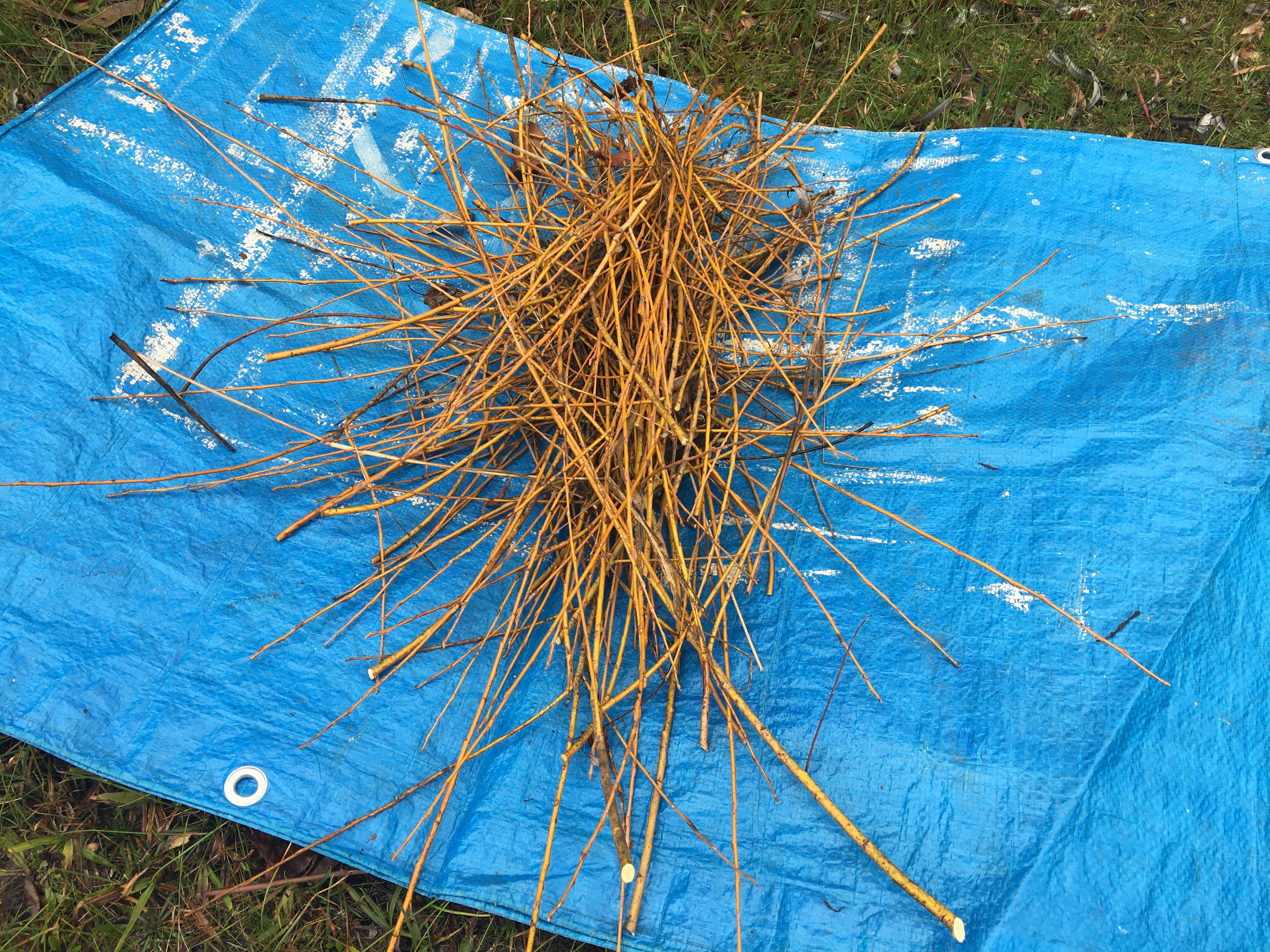
I collect natural plant material with the seasons. Winter is when I take the trailer out into the waterways of the Hepburn Shire and collect wild willow. It stands in buckets of water until I make a sculptural basket or take it to a basketry workshop for participants to weave with. This year I found a patch of golden willow that was a year or two old, with lovely long straight willow osiers that are perfect for weaving. On Saturday September 10, I am facilitating a “Weaving a Garden Fence” workshop when this willow will be used. We last renovated the wild willow decorative fence at the Creswick Neighbourhood Centre in Sep 2019. It lasted 3 years and you can see the effects of the weather on the willow bird, who has been relegated to the compost! I took the fence down and put the willow in the trailer, as you can see it is still in fairly good condition after 3 years of atmospheric wear and tear.
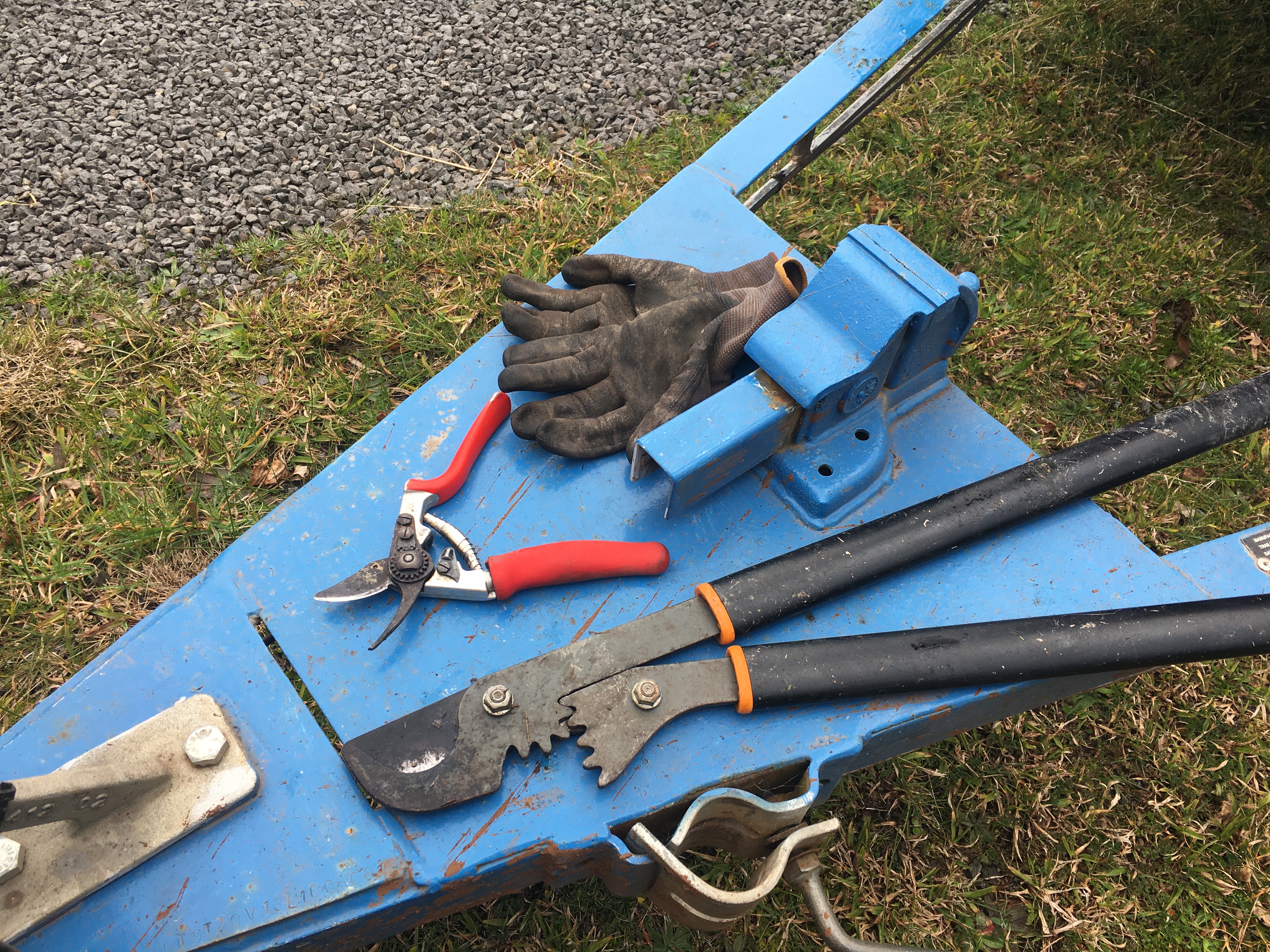
Gloves, secateurs and loppers are the only tools I need to harvest this problematic natural material. I make sure to collect all small pieces of trimmed willow and remove it from the waterway so I don’t spread willow. As you may be aware, willow is a declared weed in Australia. It spreads fast, congests waterways and out competes native species. If willow is removed there is the cost of replanting native plant species and caring for them until they thrive. Removing willow without this continued investment may lead to erosion and waterways that are in poorer health. Willow removal is a controversial subject in our region (the Central Highlands of Victoria), one that I like to discuss so that there is more understanding of the issue.



 Jodie Goldring
Well done Jodie, I love what you do, using something that is a pollution nuisance and turning it into an artwork that is both rewarding and creative.
Thanks dad! You got it! Highlighting waste by using waste and turning it into something beautiful!
oh i built that fence with you in 2019. I can’t believe it is time for renewal already. How time flies!
Yes it has! Although, warped pandemic time! I cant wait to get stuck into it again this year. Fingers crossed the weather is not too intrepid.
Hi Jodie,
we are looking for someone in Australia who weaves with willowbark, stripped from 2-year and 4-year growth.
In the US it is a fine art, with folk growing different types of willow for different purposes, and we are wondering if what we have learned from a US teacher (in NZ) could be replicated here, either with willow bark sourced in Oz or with a native/local substitute?
have you any ideas on this?
cheers – Merelyn and Helen (South Australia).
Hi Helen, I have experimented with willow bark, using it for the spokes of a small twined basket. It worked well and I want to use it for more plaited and twined baskets. I was inspired by the work of Jennifer Zurick – https://www.jenniferzurick.com/. I haven’t had enough experience with willow bark to properly advise. I do encourage you to give it a go!